
Does the technology
actually work?
We assess whether the technology works and is scalable, the data holds up, the tech claims are real.
Four risks a technology
review needs to answer.
The question is not whether technology exists. It is whether it works at the scale and under the conditions the thesis requires. These are the four gaps that surface most often in impact portfolios.
Technology that cannot scale
Systems handling today’s volume often fail at 3 to 5 times current load. Remediation costs appear after close, not before.
Data that does not hold up
Manual workarounds dressed as reporting systems are common. The gap becomes material under LP scrutiny and at exit.
Tech claims that are not real
AI and automation are frequently overstated in deal materials. Governance gaps and absent documentation reveal the difference between a working model and a pitch.
Unquantified post-close spend
Technology requirements not captured before signing are the most consistent source of margin erosion in the first 18 months after close.
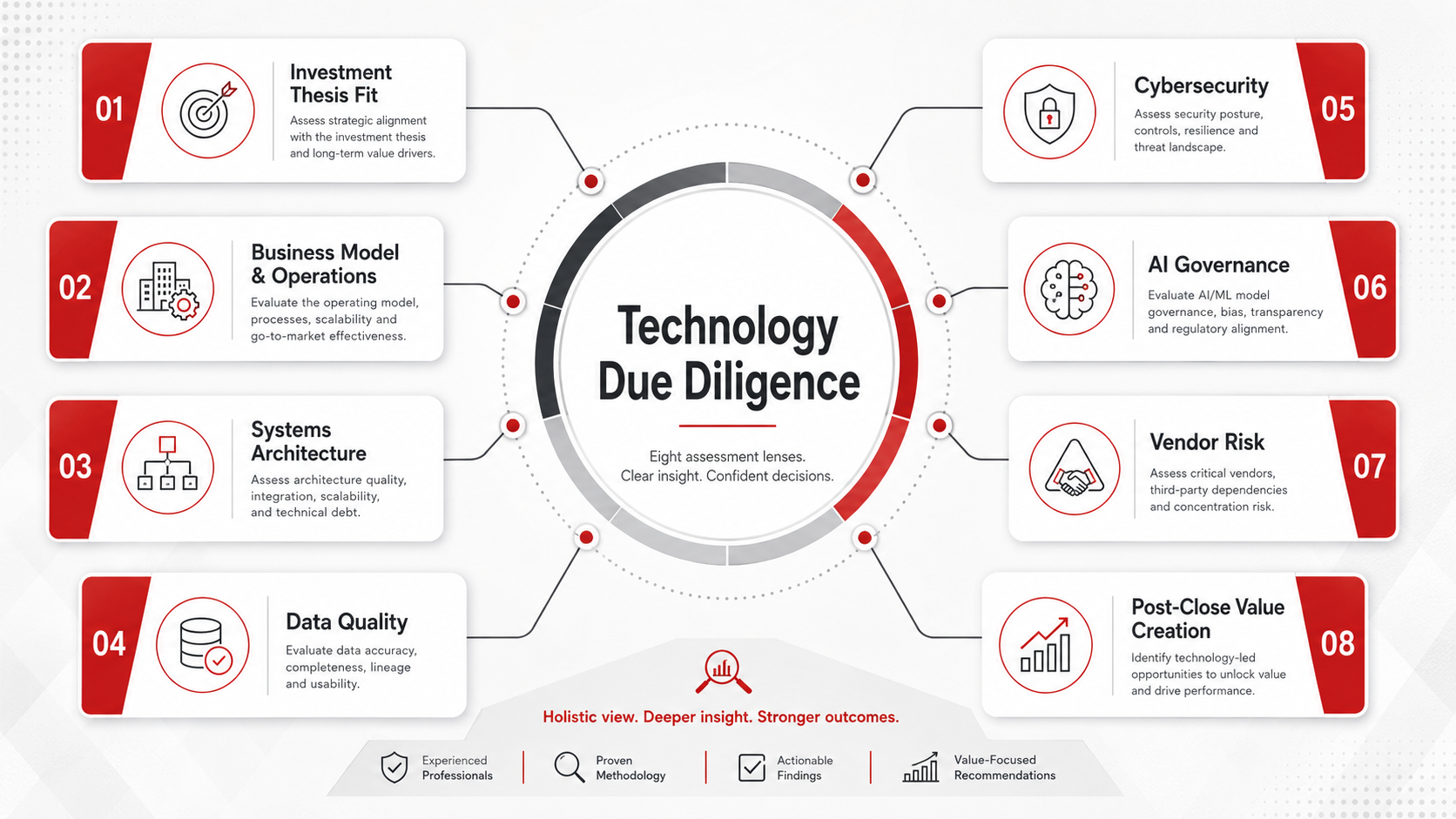
Eight lenses.
Each lens connects the tech stack to the investment thesis. The combined output is an investment-grade view of what works, where data is fragile, and which claims can be substantiated.
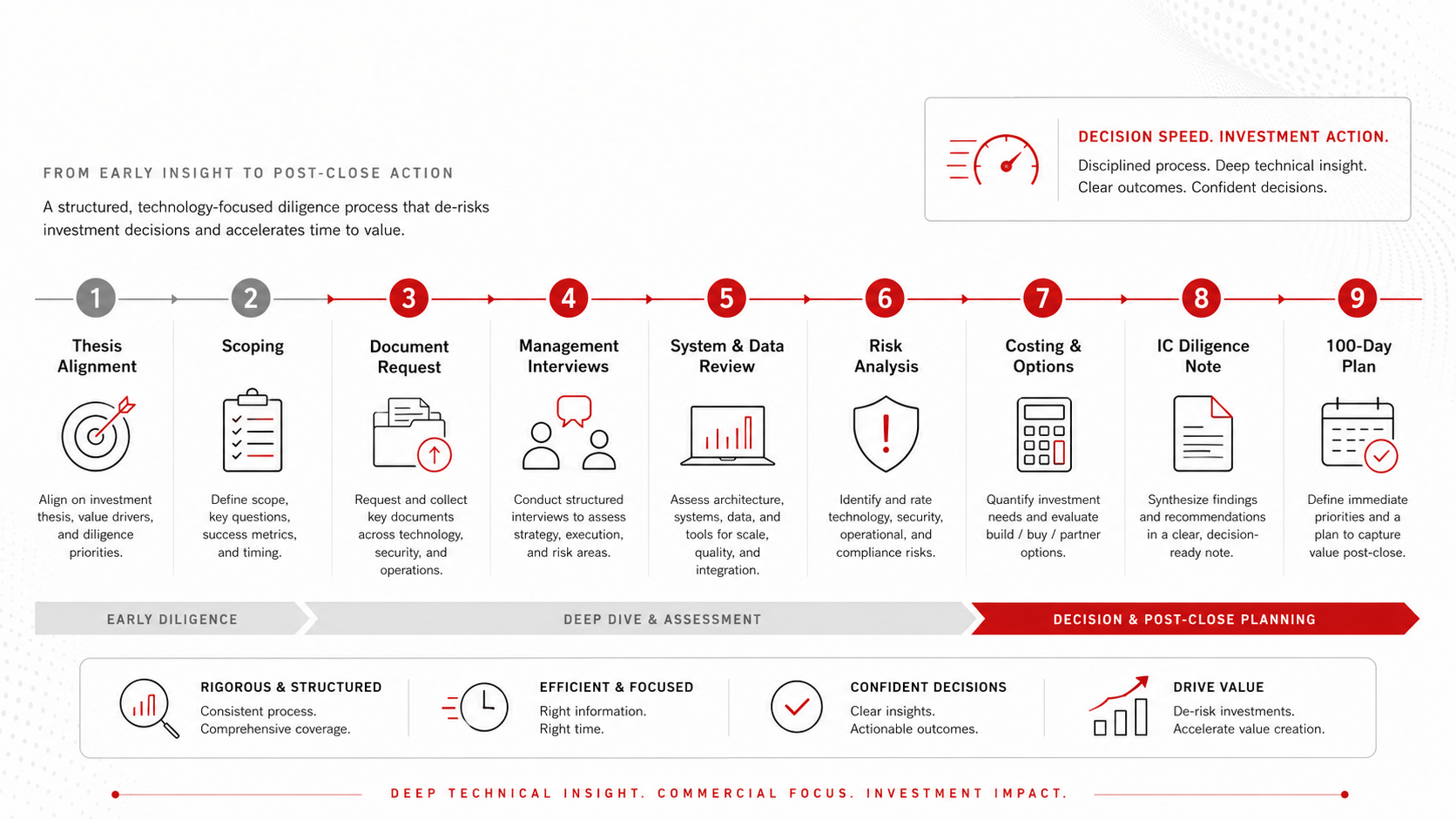
A deal-speed process.
Built for IC decisions.
Nine stages from thesis alignment to post-close support. Scoped to match deal pace, with outputs anchored to investment action.
Red-flag review
An early read on technology, data, AI, cyber, and vendor risk before full diligence commits. Used when the fund needs rapid clarity on whether to proceed and where to probe harder.
Full diligence workstream
All nine stages at deal pace, alongside financial and commercial workstreams. IC-ready findings on technical risk, investment requirements, and value creation implications.
Diligence and 100-day plan
Full diligence with a sequenced post-close plan: priorities, owners, KPIs, and early wins across systems, data, AI, cyber, and critical workflows from day one.
Adapted to the business model and context.
A lender, a processor, and a climate platform do not fail in the same ways. The diligence agenda is adapted to the operating reality of the company being assessed, with sector specialist support.
Lending and MSME finance
- Credit models, bureau integrations, and responsible lending controls
- Origination, collections, and portfolio monitoring workflows
- Payments, reconciliation, and field operations
- Digital channel scalability and embedded finance readiness
Agriculture and supply chains
- Farmer registries and supplier data quality
- Procurement, grading, and payment workflows
- Traceability, chain of custody, and buyer reporting
- Embedded finance readiness from transaction data
Climate and resilience
- Climate data quality and reporting cadence
- Geospatial infrastructure and resilience indicators
- Greenhouse gas logic, avoided emissions, and assumptions
- Evidence quality behind impact claims at exit
AI, data, and cyber risk
- AI model governance, bias checks, and human oversight
- Data protection, access controls, and incident readiness
- Vendor SLAs, data rights, and exit provisions
- Regulatory compliance and AI documentation standards
Six deliverables.
Each built for a decision.
Diligence is not a report. It is a decision. The six core deliverables converge into two practical outcomes: a clearer investment decision and a more useful post-close action plan.
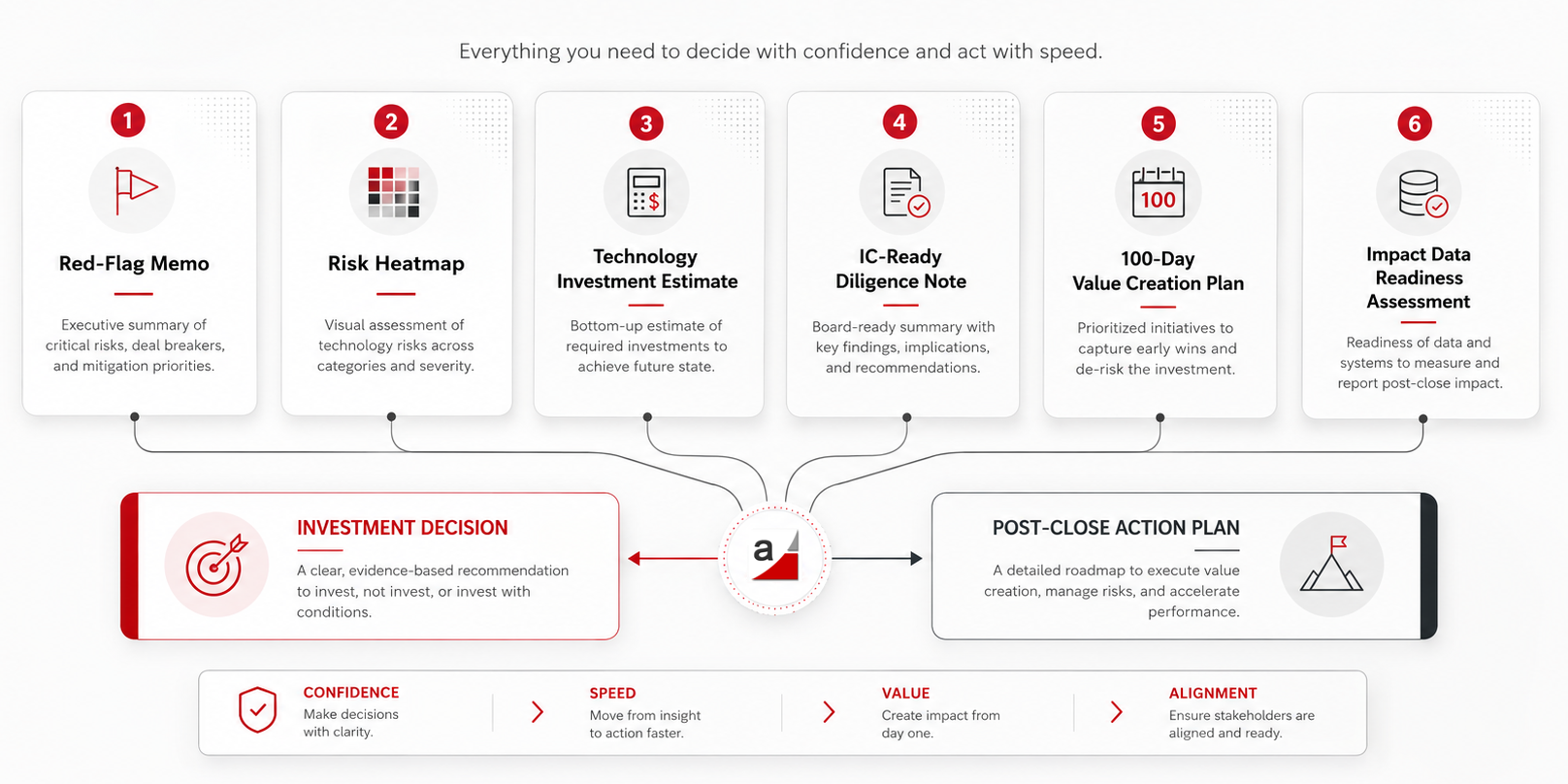
Red-flag memo
Top technology, data, AI, cyber, and vendor risks before full diligence begins.
Risk heatmap
Each risk rated by severity, timing, and deal implication — covenants, conditions, or valuation adjustment.
Technology investment estimate
Post-close remediation and transformation costs by category, as direct input to the deal model.
IC-ready diligence note
Risk, value potential, and recommended deal protections — written for the investment committee, not a technology team.
100-day value creation plan
Sequenced priorities, owners, and KPIs across systems, data, AI, cyber, and workflows from day one after close.
Impact data readiness assessment
Evidence quality assessed against LP reporting requirements and exit due diligence standards.